“We demand work. The slogan of our march is: ‘Give us work by constitutional methods.[’] We are American citizens who believe in our government; we are ready and willing at any time to offer our lives on the altar of our country, but we believe, like the Unknown Soldier, that all public officials should keep faith with God and their country and be willing to make any and all sacrifices necessary to make it possible to enjoy all the blessings supposed to be ours when that Old Liberty Bell rang out in Philadelphia in 1776 and declared to the entire world, east, west, north and south, that this is a government of the people, by the people, and for the people, in which every man has a right to the pursuit of happiness.”[1]
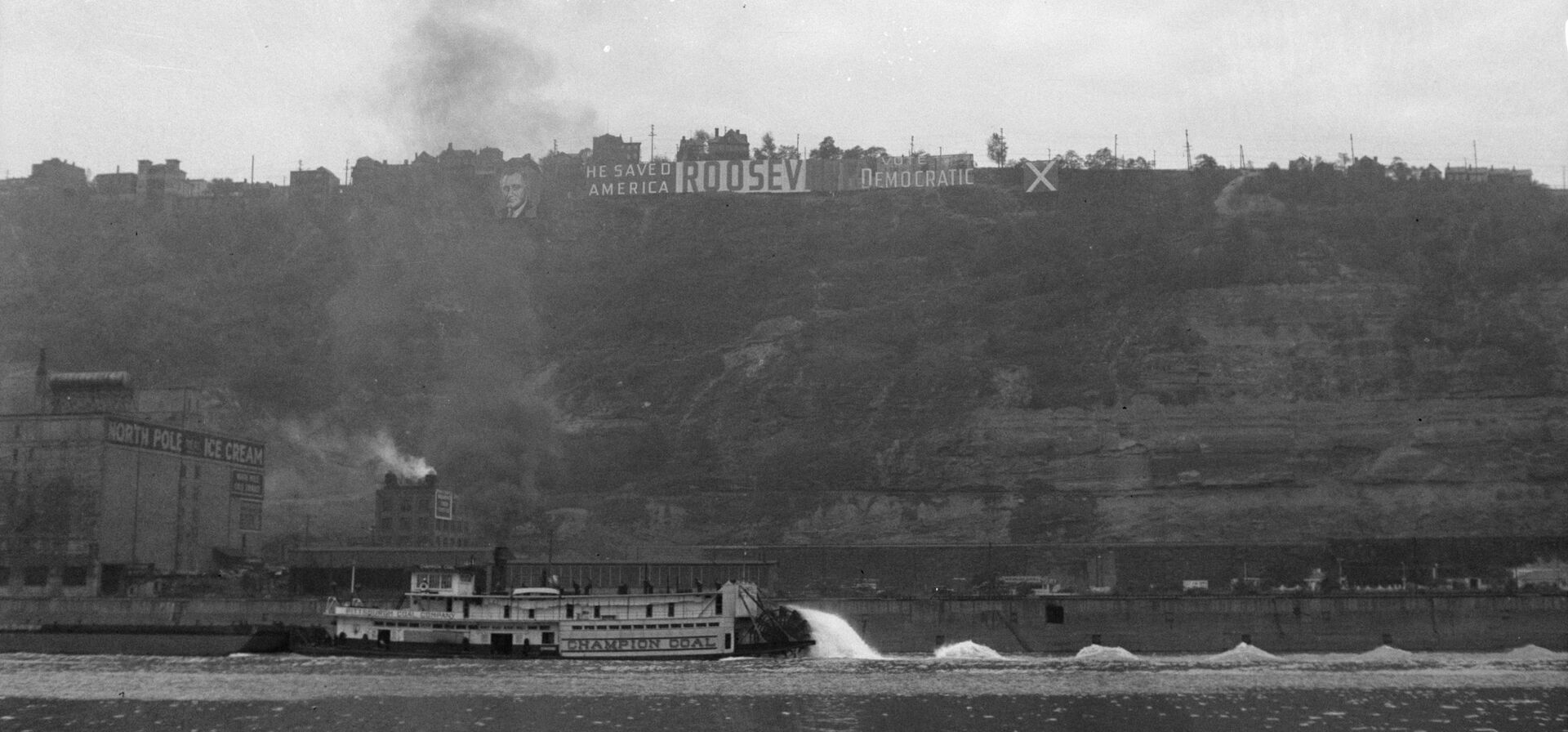
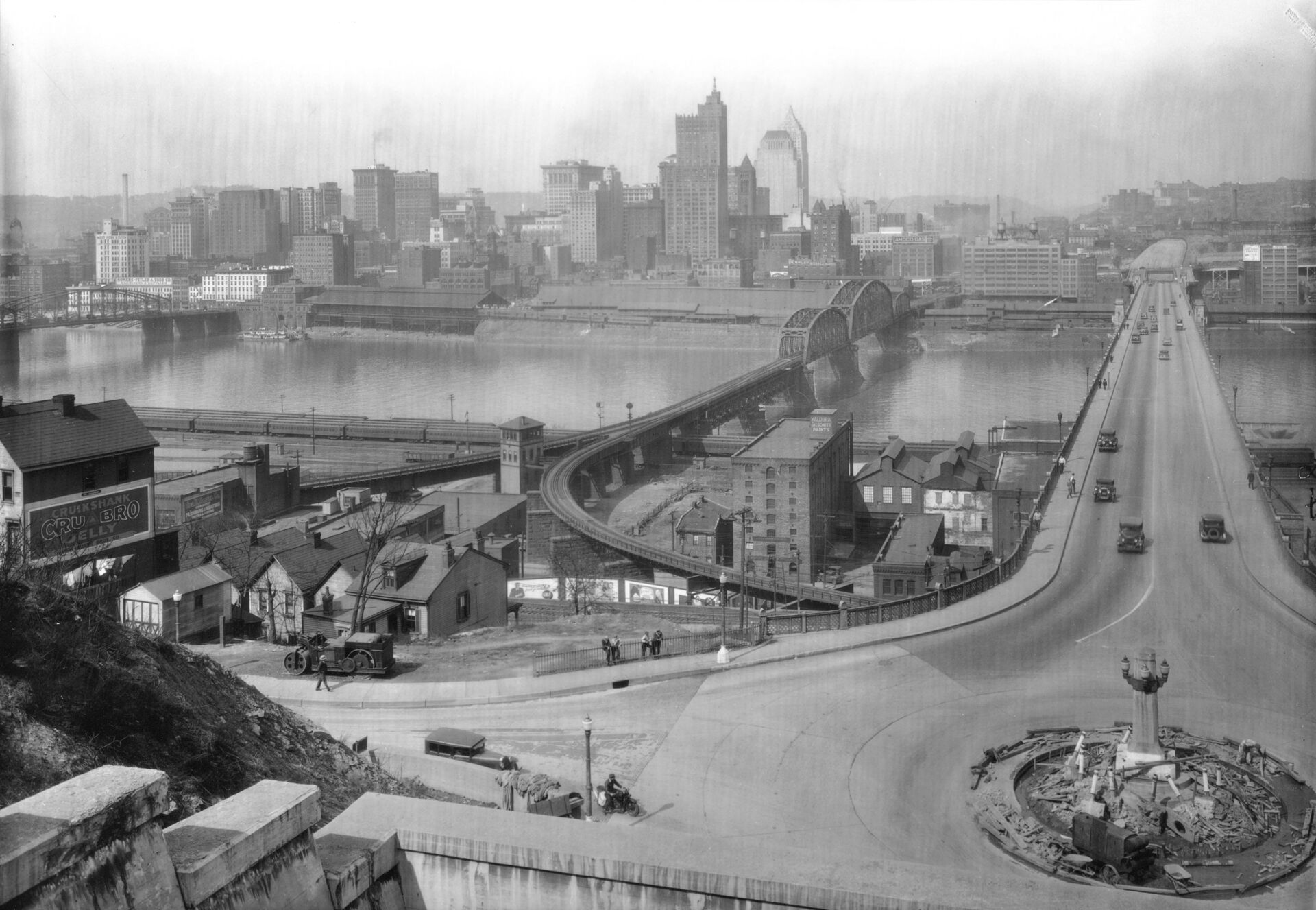
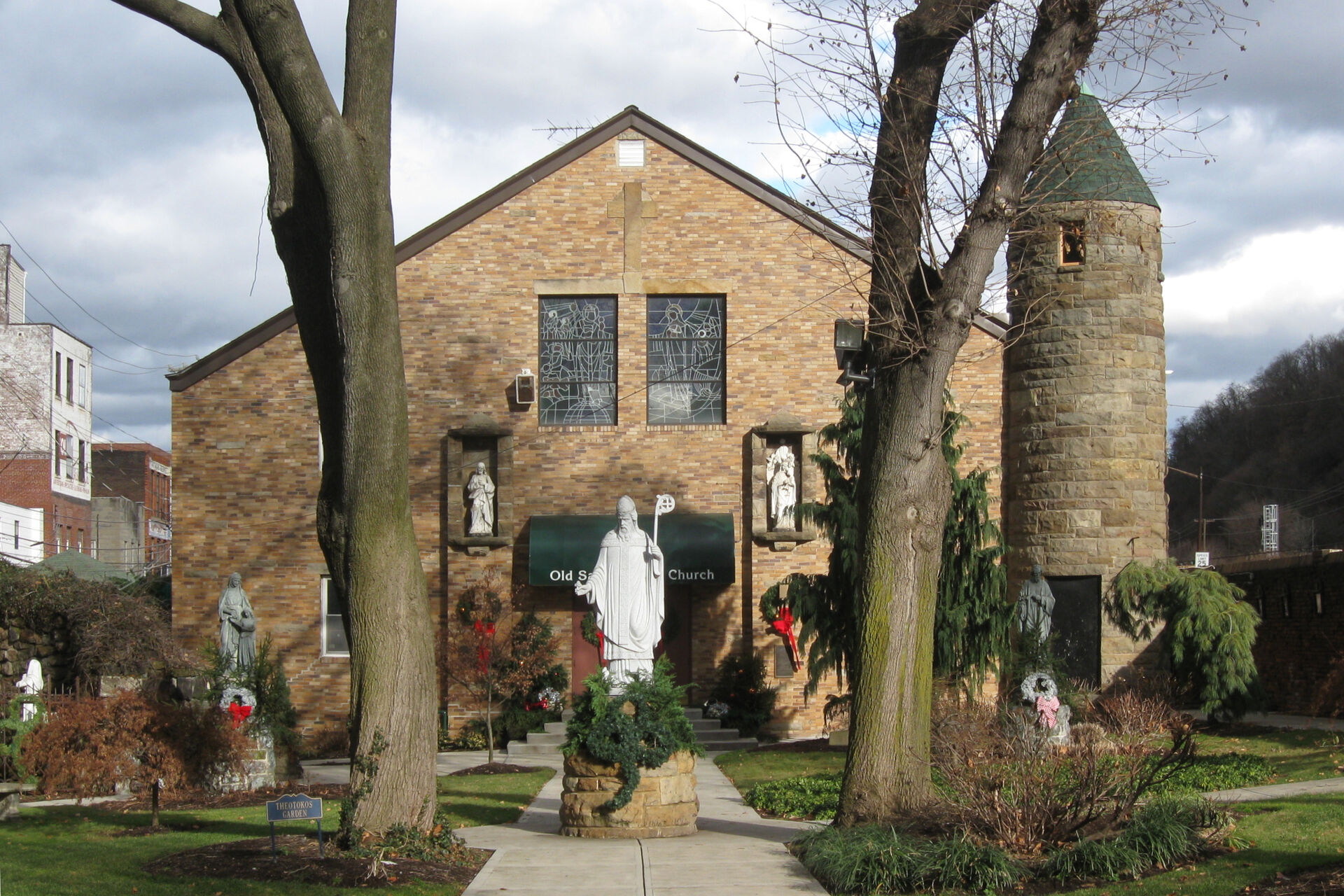
These were the words of Father James Renshaw Cox on the afternoon of Sunday, January 3, 1932, in the basement of Old St. Patrick’s Church, in Pittsburgh, Pennsylvania. Father Cox was not one who liked to compromise, particularly when American citizens were starving in the streets. The Great Depression had over the past three years laid low the people of Pittsburgh. The city’s steel mills, when operating at capacity made the city “like looking over into hell with the lid taken off” as memorably described by a writer for Atlantic Monthly. These mills lost much of their infernal nature to the Depression; from 1931 they had operated at only half capacity.[2] Two days after he delivered this speech, Cox led approximately fifteen thousand of the unemployed from across Western Pennsylvania in a march on the capital, Washington, DC.[3] The marchers arrived the night of January 6, and were begrudgingly received by President Herbert Hoover the next day. They presented a copy of Cox’s own “Resolution of the Jobless” to the Congressional Record, then were back on their way to Pittsburgh the same night in a three-and-a-half day rush.[4] Less than two weeks later and in front of a crowd of over fifty thousand at Pitt Stadium, Cox announced that he would run for president as a representative of the “Jobless Party,” and – of course – that he was “confident of a sweeping victory.”[5] This was the beginning of a pollyannish presidential campaign, something truly one-of-a-kind, and which is still quite underexplored by historians.
On one level, the lack of scholarly interest is unsurprising as Cox is largely a topic of regional interest who faded away quickly after the 1932 presidential election. Father Cox remains of interest to some Catholic historians like Kenneth J. Heineman, who straitjacket Cox into logical narratives of the victory of the Democratic Party over Pittsburgh, and the Catholic Church’s (surely large) role in said victory.[6] In non-religious histories, however, Cox has fallen more by the wayside. He receives an off-hand mention in Alan Brinkley’s account of Depression-era populism Voices of Protest and another in Impatient Armies of the Poor by Franklin Folsom as a foil to the leaders of Communist hunger marches.[7] Both books are now over thirty years old. With the intention of reviving and reframing the subject, it may be interesting to think about Cox as a centrist populist, rather than just an anti-Communist.
Populism, loosely defined, pits the ‘people’ against the ‘elites,’ hoping to see the sovereignty of the people triumph. But populism is also an ideology that cannot stand on its own, as Ben Stanley states; pure populism can only demand that “the people ought to get what they want, when they want, however they want.”[8] In 1930s America there were many populists; both those of the right and left that Brinkley and Folsom discuss, and also many others as well. For the right and left their aims are often more self-evident, but more non-aligned populists operate somewhat more quixotically. As was the result at least in Cox’s case – that their ideas prefigure or come ahead of future ‘elite’ politics. To borrow a phrase from the historian John D. Hicks, the reforms of the 1930s populists were “despised and rejected for a season.”[9] For their efforts, centrist populists were at the least tolerated, or given a grudging respect by their contemporary elites so long as they did not agitate too much.[10] Writing for The New York Times, the influential historian Arthur M. Schlesinger Jr. staked a position that the “non-Communist Left” and “non-Fascist Right” would need to join forces and be “committed against both totalitarian extremes and in favor of affirmative programs for political freedom and economic stability.”[11] This was written after World War II, but even in 1932 such political instincts were in development. Staunch and ideological anti-Communism was the default for many, but the verdict was not yet in on Fascism, so staying the ‘middle course’ meant a much wider range of expression. Cox drew from the things around him: church doctrine, Fascism, patriotism, and even fellow populists. In the service of his non-radical cause adopted radical tactics and methods; his aim was not revolution, only reform.
Anti-Communism and Aggrandizement
Before his presidential run in 1932, Cox had lived a life which in many ways informed his future political positions. Most important was his military service as a chaplain in the First World War, of which he was quite proud. Upon returning he became a full priest and for one service in 1923 Cox decorated the church inside and out with American flags, then delivered “a biting anti-Communist sermon.”[12] In his earlier writings too Cox had expressed distaste with “atheists and socialists,” saying that “they refuse to work or to take care of what they make at work.”[13] Coming from a poor Catholic family, Cox embodied much of the American ideal of a bootstrapping man, a man who got by and reached success by their own initiative and most certainly not by liquidating the capitalist class. Another point of contention for Cox was surely that Communists and Socialists were ideologically atheist. Cox had also no doubt read the papal encyclicals Rerum Novarum and Quadragesimo Anno, which in response to socialist ideology aimed to make the church itself more socially involved. Fully introducing the pair of these would occupy far too much space, but they were influential within the church, inspiring the movement of ‘Catholic social teaching’ and figures like the activist Dorothy Day.[14] Even as Cox ennobled hard work, he also believed that the Depression represented an unfair situation for those who could work but were unable to.
This viewpoint is apparent especially during the Great Depression. Cox claimed that during a major strike of Pittsburgh’s cab drivers in 1930 he served for them as an unofficial leader and representative. He would provide them a meeting space in the basement of Old St. Patrick’s and urged them to be both uncompromising towards their company and to not resort to violence.[15] At the same time, on his Sunday sermons he became more inflammatory. His sermons were transmitted over the radio and became something of a local news item. On one program he announced that there was $225,594,711 of tax-exempt property in Pittsburgh alone, emphasizing that this put an unfair burden on the single homeowners who diligently paid their taxes.[16] In another episode, Cox was appointed as an observer to the state of Pennsylvania’s public utilities investigation board thanks to him being acquainted with the governor. From this position he decided to tease a “bombshell” declaration that “one gentleman… [does] not only control the utilities, they control the United States government, and when the bomb bursts it will show one dominating figure in political life.”[17] It does not seem that Cox ever revealed the name of this man, but he certainly succeeded in making a name for himself at the time.
The mixture of anti-Communism and self-aggrandizement led to the genesis of the “Jobless March” on Washington. In the late weeks of 1931, a Communist organization called the Unemployed Councils planned a hunger march on Washington for December 7. Despite leveraging connections they had with police and congressional contacts, the marchers had a hostile reception. They were met by police formations bearing machine guns and sawed-off shotguns. At least thirteen were arrested for marching without a permit, and the police beat one of those arrested.[18] Cox had taken to the pulpit the night before and made clear his conviction to lead his own “hunger march” on Washington in defiance of the “Communists” and “Radicals.” In fact the date Cox’s march would arrive at the Capitol was to be exactly one month later – January 7. Following up his swipe at the Left with critique of the wealthy, Cox likened the state of the economy to boys playing with marbles, where “one boy wins everything and the game stops because he is a selfish fellow… The financiers and bankers have won all the gold.” He went on to claim that if there were “proper administration” everybody could have a job, and that his march would be merely to demand jobs and no other form of relief.[19] Here again is the recurrence of the belief in hard work, that wealth is something that can be unfairly hoarded but that should not be ‘unfairly’ distributed without an investment of one’s own labor. The system was not broken, just in need of a shake-up.
From the March to the Campaign Trail
Despite Cox’s calling it a hunger march at first, the march soon became known as the “Army of the Jobless” or “Cox’s Army” as they trooped across Pennsylvania. In truth it was less of a troop than a roll as most of the marchers went by automobile. Cox had secured full support from important figures like PA Governor Gifford Pinchot and cooperated with the state and Capitol Police. Where a month ago the Communists found themselves at the end of a barrel, the ‘Army’ was welcomed with open arms. Pinchot fed and housed the marchers along the way in the PA state capital Harrisburg, and in D.C. the police and Red Cross did the same.[20] Much of the reception had to do with Cox’s willingness to bash the Left. Certainly many of the marchers themselves shared this view – otherwise few would have followed. In interviews the marchers emphasized their politics and economic situation. Andrew Schultz of Swissvale PA said “We aren’t red or even mildly pink. All we want is jobs and some assurance from the Government that something will be done to prevent this in the future.” Another young man put it more simply: “It’s no job no wife for us blokes.”[21] The ‘honest hardworking man’ image typified by the marchers helped to assuage the public, and more broadly represented the appeal of the march.
Following up his swipe at the Left with critique of the wealthy, Cox likened the state of the economy to boys playing with marbles, where 'one boy wins everything and the game stops because he is a selfish fellow... The financiers and bankers have won all the gold'
After festivities the next morning, Cox was ushered in to see President Hoover. The meeting was not very productive, Cox encouraged the creation of new jobs, while Hoover stated his aim as “to restore men to employment through their regular jobs.” This contrasted with Cox’s Resolution of the Jobless, which endorsed among other points the allocation of five billion dollars for “the creation of work in public construction,” relief for those unemployed, and for these to be funded by new income and inheritance taxes.[22] It is here that we can discern another possible origin point of Cox’s ideology – namely Louisiana Governor and soon Senator Huey Long. Long espoused his own populism that was quite popular at the time, he even aimed to run against Roosevelt in 1936, a plan that went unrealized due to his assassination. Long was a prolific orator and writer, and as Brinkley notes, his newspaper had since late 1930 gone to great lengths in condemning “wealth maldistribution.”[23] One of Long’s proposals in the Senate only a couple of months later would demand “that no person during his or her lifetime shall receive by gifts, inheritances, or other bequests more than $5,000,000” along with a limit on annual income to $1,000,000.[24] These demands were remarkably similar to Cox’s. This arguably shows how both may have originated in the same veins of discontent, or further may have been connected.
An event at Pitt Stadium that was meant to be “first unemployment demonstration by women” – women were discouraged from joining the March of the Jobless – was essentially taken over by Cox and turned into the launch for his presidential campaign as the leading candidate for the Jobless Party.[25] From this point it was obvious that the party was at the very least centered around one strong personality – Cox. Due to this, some of the others who were involved in the party’s planning are not present in most newspaper reportage and Cox’s very singular vision began to dominate the understanding of the party itself.[26] Cox bulldozed the women’s movement for his campaign announcement and likely many others along the way. It then becomes more difficult to say to what degree developments in the party are tied to top-down or bottom-up pressures. From existing sources much of it seems to be largely proclamations from above largely determined by Cox’s fancy. The military elements of his march and later party are exemplary of this.
It seems that Cox heavily borrowed from certain ongoing trends in Europe, that is to say he eagerly adopted the shirt model used so infamously by the Italian Fascists and German Nazi Party. Emerging from the flames of World War I those wearing the black and brown shirts doubted the foundational bases of their liberal establishments. Cox’s newly christened Blue Shirts[27] came out of the same war seeking to shore up the foundations of the American system. As one contemporary observer suggested: “this blue shirt army seeks no fascist dictatorship; it is the people as dictator that Father Cox seeks to set in power.”[28] What “the people as dictator” means is not exactly clear, but the adoption of the shirt model still has troubling connotations. After an ill-advised trip to Italy and Germany later that year, Cox made clear that he rejected fascist principles given the “absolute loss of personal liberty and the complete degradation of the individual under the dictatorship” that he saw in Rome.[29] Still, he did not scrap the shirt model.
Militarism and patriotism in excess began to overtake other elements of the party as well. In both April and June, Cox held a fundraiser “aerial circus” which featured “stunting exhibitions” and “bombing contests.” The flyer for the April event advertises that the reader can “get their shirt” for the party convention for the price of one dollar.[30] To the June event Cox arrived at the field in a plane wearing an army captain’s uniform from his service in WWI. During the event hundreds of Blue Shirts reportedly paraded and drilled in the field.[31] Cox increasingly wore military garb as the date drew nearer to election day. A photo captured of him campaigning in September shows him wearing a side cap emblazoned with the words “national chief” while Cox nonchalantly throws the one-armed Roman salute. In another photo, his companions all wear the same Blue Shirt outfit as him as they prepare for a campaign stop.[32] While fascism was not yet sullied by the reports of antisemitism and party purges that would soon come from Germany, it is clear that Cox’s instincts emerge from similar places to the European fascists, faith in nation and military veneration.
Cox increasingly wore military garb as the date drew nearer to election day. A photo captured of him campaigning in September shows him wearing a side cap emblazoned with the words "national chief" while Cox nonchalantly throws the one-armed Roman salute
Cox’s message and tactics did not resonate as they might have in Europe despite his best efforts. After the convention Cox put together a grand tour of the United States in order to gather votes after August. Due to budgetary issues his campaign made the most stops in neighboring Ohio. Distant second and third were Indiana, and Kansas. Outside of those three they visited only six other states though they aspired to go as far West as California.[33] Their rally attendance dropped off precipitously as many people further West likely did not know of Cox. At this point the walls had begun to close in financially. The party’s first recorded period from June 10th to August 12th had a deficit of 612 dollars and never even came close to a hint of a profit. In different areas of the records the losses were higher, recording a loss of 4,989 dollars at the airshow on June 10th, and on the campaign trail, losses of 1,279 dollars.[34] This in addition to exhaustion of campaigning for almost two months brought the run for president to a screeching stop. In something of an anti-climax, Cox quit his campaign in October, endorsed Roosevelt, and never returned to politics. He received only 741 votes, likely as an effect of his quitting being well-publicized in the Pittsburgh region.[35]
Conclusion: The Radical Non-Radical
Ultimately, Cox did receive the shake-up that he desired for democracy. Roosevelt’s first hundred days were radically different from those of any other president’s tenure as he levied the full weight of his executive power towards the alleviation of the Depression. Although not everything that Cox wished for was completed by Roosevelt, many things like Cox’s plan for farm relief and public work projects were fulfilled.[36] In a similar vein, many of Cox’s tactics which he had borrowed from radical groups went on to be used in mainstream politics at an increasing frequency. Roosevelt was the first president to take full advantage of radio as a way to communicate with the voting public through his “fireside chats.” The ‘March on Washington’ model of protest would also come into vogue in the mid-20th century, most famously practiced by Martin Luther King Jr. Cox was so enamored with Roosevelt that he in 1936 endorsed Roosevelt to be dictator for ten years, so that the American people could be free from being trampled “under the heel of a rubber-stamp Congress.”[37] As a centrist populist Cox was a model for what was yet to come in American political life. His tactics in some ways can be considered to have represented a part of the process of the personalization of American politics.
[1]
Apostrophe missing in original. Leaflet of speech in scrapbook “The Father Cox March of Jobless” by James R. Cox, [1932?], Saint Patrick’s-Saint Stanislaus Kostka Church Archive, Saint Patrick’s-Saint Stanislaus Kostka Church, Pittsburgh PA. – From here on this archive will be referred to as SPSA, and the two following archives will also be referred to by abbreviated names: the Catholic Diocese of Pittsburgh Archives, Catholic Diocese of Pittsburgh, Pittsburgh PA (CDPA) and the Father Cox Collection, University of Pittsburgh Archives & Special Collections, Pittsburgh, PA (UPA). The CDPA and SPSA lacked formal folder or box systems when last accessed, as such documents and articles referred to will be without accession references.
[2]John H. Hinshaw, Steel and Steelworkers: Race and Class Struggle in Twentieth-Century Pittsburgh, SUNY Series in American Labor History (Albany: State University of New York Press, 2002) 41.
[3]Newspaper clipping in scrapbook “COX LEADS JOBLESS ARMY INTO WASHINGTON IN STORM,” Pittsburgh Post Gazette, January 7, 1932, (SPSA).
[4]Pamphlet “Father Cox’s Own Story of Jobless March to Capitol” by James R. Cox, [1932?], (CDPA); U.S. Congress, Senate, Congressional Record—Senate, 72nd Cong., 1st sess., 1407-1408, https://www.congress.gov/bound-congressional-record/1932/01/07
[5]Newspaper clipping in scrapbook “Father Cox’s Platform,” Philadelphia Record, Jan 20, 1932, (SPSA).
[6]See: Kenneth J. Heineman, A Catholic New Deal: Religion and Reform in Depression Pittsburgh (The Pennsylvania State University Press, 1999); Kenneth J. Heineman, “Catholics, Communists, and Conservatives: The Making of Cold War Democrats on the Pittsburgh Front,” U.S. Catholic Historian 34, no. 4 (2016): 25–54, https://doi.org/10.1353/cht.2016.0026. Also see: Sally Witt, “From the Ranks of the Ordinary People: Father Cox and Pittsburgh in the 1940s,” Pittsburgh History, Summer 1997, 52–59.
[7]Alan Brinkley, Voices of Protest Huey Long, Father Coughlin & The Great Depression (Vintage Books, 1983); Franklin Folsom, Impatient Armies of the Poor: The Story of Collective Action of the Unemployed 1808-1942 (University Press of Colorado, 1991).
[8]Stanley 107
[9]John D. Hicks, The Populist Revolt: A History of the Farmer’s Alliance and the People’s Party (University of Nebraska Press, 1931): 404.
[10] Agitating too much was to be the fatal slip of Smedley Butler and the Bonus Army who were similar to Cox in that they were less-than-radical protesters who marched on Washington. They demanded early payment of bonus certificates they received for their service in World War I given the conditions of the Depression. They set up camp Southeast of the city center but were violently removed by General Douglas MacArthur at the order of the Attorney General in July 1932. This is regarded by most historians to have been the final nail in the coffins for Hoover’s election prospects. Donald A. Ritchie, “The Election of 1932,” in A Companion to Franklin D Roosevelt, ed. William D. Pederson (Blackwell Publishing, 2011): 83. Also see: Hans Schmidt, Maverick Marine: General Smedley D. Butler and the Contradictions of American Military History (University Press of Kentucky, 1998).
[11] Arthur M. Schlesinger Jr., “Not Left, Not Right, But a Vital Center,” The New York Times, April 4, 1948, https://archive.nytimes.com/www.nytimes.com/books/00/11/26/specials/schlesinger-centermag.html.
These ideas would then go on to be developed further in his 1949 book The Vital Center.
[12] Copy of newspaper clipping “Pittsburgh Day by Day” by Kenneth Speers, Pittsburgh Sun-Telegraph, March 22, 1951, (UPA); Newspaper clipping in scrapbook “Father Cox’s Platform,” Philadelphia Record, Jan 20, 1932, (SPSA).
[13] Miscellaneous Rev. James Cox Sermon Book 1911-1915, V 4128 22 015, 24-F-7, (CDPA): 64-65
[14] For examples of contemporary Catholic political and religious confluence see: George Q. Flynn, American Catholics and the Roosevelt Presidency 1932-1936, (University of Kentucky Press, 1968).
[15] Pamphlet “Father Cox’s Own Story of Jobless March to Capitol” by James R. Cox, [1932?], (CDPA): 14
[16] Newspaper clipping in scrapbook “Tax Exemption Cited as Unfair,” Pittsburgh Press, Jan 19, 1931, (SPSA).
[17] Newspaper clipping in scrapbook “FATHER COX PROMISES EXPOSE OF ‘ONE-MAN’ RULE IN U.S.,” Pittsburgh Sun-Telegraph, April 10, 1931, (SPSA).
[18] Folsom, Impatient Armies, 292-297.
[19] Newspaper clipping in scrapbook “Father Cox Will Take Lead In Hunger March on Capitol,” Pittsburgh Post-Gazette, December 11, 1931, (SPSA).
[20] Newspaper clipping in scrapbook “COX LEADS JOBLESS ARMY INTO WASHINGTON IN STORM.” Pittsburgh Post-Gazette, January 7, 1932, (SPSA).
[21] Newspaper clipping in scrapbook “Sidelights on Father Cox’s Jobless Army of 14,000,” Washington D.C Times, January 7, 1932, (SPSA).
[22] Document on the back cover of pamphlet “Father Cox’s Own Story of Jobless March to Capitol,” by James R. Cox, [1932?], (CDPA).
[23] Brinkley, Voices of Protest, 40-41.
[24] U.S. Congress, Senate, Congressional Record—Senate, 72nd Cong., 1st sess., 9202-9203, https://www.congress.gov/bound-congressional-record/1932/04/29
[25] “Crowds Jam St. Patrick’s to Hear Cox,” Pittsburgh Post-Gazette, January 11, 1932. Accessed through ProQuest Historical Papers.
[26] One quite important member was Henry Ellenbogen, a lawyer with ties to the Democratic party who became quite involved in Cox’s campaign. He was also likely one of the more important voices that most convinced him to end his campaign come October
[27] By unfortunate coincidence the Blue Shirts ended up sharing a name with the Blueshirts, the name for members of the Army Comrades Association in Ireland. Despite the fact that he had Irish heritage, Cox was not inspired by this group as Kenneth J. Heineman suggests he was. The ACA were not in the habit of wearing blue shirts until January 1933. John Coakley, “Blueshirts,” in The Oxford Companion to Irish History (Oxford University Press, 2002); Heineman, A Catholic New Deal, 27.
[28] John Ray Ewers, “Father Cox’s Blue Shirts,” The Christian Century 49, no. 25 (June 1932): 795-797.
[29] Newspaper clipping in scrapbook “Cox Of Bonus Army, Who Hopes To Be President, Here To Seek Hitler’s Advice,” Chicago Daily Tribune, June 30, 1932, (SPSA); “Father Cox Has Close-Up View of Mussolini,” The Christian Century 49, no. 30 (July 1932): 925-926.
[30] Flyer in scrapbook for Father Cox’s Aerial Circus, (SPSA)
[31] Newspaper clipping in scrapbook “15,000 Attend Air Circus,” The Daily Times, June 11, 1932, (SPSA).
[32] Newspaper clipping in scrapbook “Father Cox Stranded in West,” Pittsburgh Press, September 21, 1932, (SPSA)
[33] Newspaper clipping in scrapbook “Father Cox Stranded in West,” Pittsburgh Press, September 21, 1932, (SPSA).
[34] Jobless Party Ledger Book, June 10 to August 18, 1932, (SPSA); Manuscript of “Campaign for the Presidentcy [sic]” by Andrew Krupnick, (CDPA): 64-5.
[35]“1932 Presidential General Election Results,” Dave Leip's Atlas of U.S. Elections, https://uselectionatlas.org/RESULTS/national.php?year=1932&minper=0&f=1&off=0&elect=0; Newspaper clipping in scrapbook “Cox Quits Race, Hits Hoover and Pledges Roosevelt Support,” Pittsburgh Press, October 18, 1932, (SPSA).
[36] June Hopkins, “The New Deal” in A Companion to Franklin D Roosevelt, ed. William D. Pederson (Blackwell Publishing, 2011): 238-242.
[37] Copy of newspaper clipping “Interview with Father James R. Cox, pastor of Old St. Patrick’s Church at Pittsburgh Pa.,” Box #1 Series II (UPA).
Bibliography
Archives and Primary Sources
Catholic Diocese of Pittsburgh, Pittsburgh PA
Catholic Diocese of Pittsburgh Archives
Saint Patrick’s-Saint Stanislaus Kostka Church, Pittsburgh PA
Saint Patrick’s-Saint Stanislaus Kostka Church Archive
University of Pittsburgh Archives & Special Collections, Pittsburgh, PA
Father Cox Collection
United States Congressional Record — https://www.congress.gov/congressional-record
“Crowds Jam St. Patrick’s to Hear Cox.” Pittsburgh Post-Gazette, January 11, 1932. Accessed through ProQuest Historical Papers.
“Father Cox Has Close-Up View of Mussolini.” The Christian Century 49, no. 30 (July 1932): 925-926.
Ewers, John Ray. “Father Cox’s Blue Shirts.” The Christian Century 49, no. 25 (June 1932): 795-797.
Secondary Sources
Brinkley, Alan. Voices of Protest Huey Long, Father Coughlin & The Great Depression. Vintage Books, 1983.
Coakley, John. “Blueshirts.” In The Oxford Companion to Irish History. Oxford University Press, 2002. https://www.oxfordreference.com/display/10.1093/acref/9780199234837.001.0001/acref-9780199234837-e-161.
Folsom, Franklin. Impatient Armies of the Poor: The Story of Collective Action of the Unemployed 1808-1942. University Press of Colorado, 1991.
Heineman, Kenneth J. A Catholic New Deal: Religion and Reform in Depression Pittsburgh. The Pennsylvania State University Press, 1999.
Hicks, John D. The Populist Revolt: A History of the Farmer’s Alliance and the People’s Party. University of Nebraska Press, 1931.