
Firstly, we want to know a little bit about you as a historian, maybe you can tell us about your first interest in history?
Living in London as a child, my first interest in history came from archaeology, actually. In the 1970s, when the city of London was still being rebuilt after the war, there were a lot of archaeological digs happening underneath the foundations of the city. You could go on these little tours and see what they were finding, things like Roman shoes, as well as just see what the archaeologists were doing. Seeing that kind of material culture was really inspiring.
And from that first interest, how did you then actually become a historian?
Oh, there's lots of accidents involved. It was a long time until I made a conscious decision that I wanted to be a historian. After I'd done my undergraduate degree, I still wanted to research the areas that seemed to be missing, which was particularly women's history and especially in the late pre-modern period. I hadn't been able to study any of that as an undergraduate, so I wanted to fill that in. And since I got funding to do it, that's what I did. For a long time it seemed like it would be impossible to carry on doing that. There was a long period with no jobs, but then jobs started happening and so I thought I'll keep doing it and so it just worked out quite fortuitously at the time. I was very lucky.
Moving on to a few questions about your various research. First, we want to talk about your book Common Bodies : Woman, Touch and Power in 17th Century England, which explores the bodies of common and early modern English women. We are curious about this perception of the body, and most importantly, how did you arrive at the body as the entry point to your historical research?
This was my second book. My first one was really all about language and words and about court records. When I came to the end of that, I became very aware there was lots of stuff that I hadn't been able to look at from those records and lots of questions I didn't know needed answering. Particularly around the way sex and pregnancy was understood, and the whole politics of reproduction in that period. Around the same time as I worked on this book, historians had been working a lot on discourse, representation and cultural history, and were starting to think about a more corporeal approach that engaged with the body and how understandings of the body might have changed over time.
I wanted to look at the social side of the printed material that concerned midwifery, pregnancy and childbirth, and to find out something about how ordinary women and men experienced sex, sexual knowledge, and the whole process of reproduction. One of the starting points was the question of what pregnancy was like before scans? Before you could imagine, how did you imagine what was going on? When did you learn what was going on? Another of the starting points was looking at infanticide cases, where you could get some sense of how women articulated their sense of their own bodies as they defended themselves about whether or not they'd fought for pregnancy. You could get some sort of access to the language women had to talk about the process of pregnancy. Another of the starting points was all the many, many prosecutions for illegitimacy and attempts by magistrates to deal with illegitimate children and their mothers. This often involved magistrates and also midwives interrogating women about who was the father of their child, so you've got lots of interesting information from that.
We have another question about Common Bodies. You argue that bodily events such as desire, labor and motherhood, which are usually perceived as something natural, are in fact products of culture. How would you explain to someone who is unfamiliar with this idea that gender and even bodily events are something that can be considered culturally conditioned?
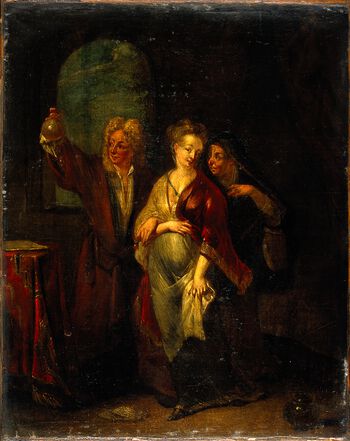
I guess I'd go back to that point that I mentioned a second ago about pregnancy as an example. Think about how our understanding of pregnancy is conditioned by all the images that we have seen from modern medical science, x-rays, scans and photography. Imagine what it would be like if you had no chance of seeing anything like that and you were doing it all by feel; that you didn’t know what a fetus or an embryo looked like. What would that be like? For early modern women, their knowledge came from quite different sources: touch, imagination, religious teaching. Catholic tradition offered female saints to pray to in childbirth, while Protestant changes urged women not to rely on old rituals. Midwives’ handbooks in the Protestant era advised that only God could explain what went on inside the body. Popular knowledge described women’s reproductive bodies as swelling and settling down somewhat unpredictably. Quickening, at around the fourth month, was the moment that life entered the fetus, when the pregnant women felt it move into life. So all those things went into shaping the experience of pregnancy, making it very culturally specific.
Think about how our understanding of pregnancy is conditioned by all the images that we have seen from modern medical science, x-rays, scans and photography. Imagine what it would be like if you had no chance of seeing anything like that and you were doing it all by feel
You worked on a social history study of the bed published in 2014 in The Journal of Architecture, Design and Domestic Space where you illustrate the change from the 16th century where the bed and the bedroom were in some respects a public sphere while in the 18th century the bed and bedroom shifted to a private sphere. Can you tell us how this shift impacted women specifically at the time?
That's a good question, and I wonder if I could have addressed that more explicitly. This shift from public to private is quite a contested one. But there's also a lot of evidence for various ways in which we can see that happening in the 17th and the 18th century. And thinking about it in relation to the intimate space of the bedroom is actually very significant for women. I guess one of the ways we might think about it is what happens when sex, either in marriage or out of marriage, becomes more private and less public. The early modern household, the early modern family life was very much monitored and regulated by local authorities and by individuals, by people's neighbors. Once that stopped happening as much, there was more privacy, and to a degree more sexual freedom. But there was also more vulnerability, if people aren't going to interrupt, there's more vulnerability of young women, for example, to their masters. When marriage and intimate relationships become a private affair, people stop thinking it's okay to interrupt what's going on in somebody's house, there's possibly a good deal less capacity for intervention. I wonder if it also had an effect on friendship, both for relationships between women and relationships between men. There was a time when it was very, very normal to share a bed as you were passing through somewhere or when you were travelling with somebody. And then that became less common.
In this type of research, and in a lot of your other research, you focus on common people. And this is in the early modern period, so we can imagine finding sources can be a challenge. What type of other sources have you used and what are the challenges you have faced?
I do use a lot of legal records. In this period, there was a lot of litigation and prosecution in England in particular. It's a very legalistic culture, so that's a really good place to find people being asked interesting questions and giving long, complicated answers written down by clerks. And there's lots of narrative, even though one wouldn't want to take every single narrative as absolutely true, looking at what the stories are and how plausible they are gives us a really good sense of how people talked about their lives and what the realm of possibility was. Local legal records are really significant, both the ones of the church and the ones of the state. But also important is cheap print. It's a great era of cheap print. Even though there seems to be a very low level of recorded literacy, we don't really know how many people could read and what kind of partial approaches they had to reading. If we think of literacy as a more expansive concept and consider the ways in which, for example, people might have heard a ballad or seen a ballad sheet and looked at the picture and remembered, some of that helps us understand how women before 1600 who seem to very largely not have been able to sign their names and documents they could still have a good deal of access to the world of cheap- and popular print.
Another of your research interests is the history of London, which you also mentioned to be central to your initial interest in history. One of your recent books, Ingenious Trade : Women and Work in Central London, binds these two interests together. How would you say the city of London shaped women's social and economic opportunities?
That's a really good question. There's so much evidence from the point at which we start having memoirs and personal writings of women wanting to come to London. The most important point, perhaps, is the impulse to migrate and the movement of urbanization, which very much affected women in England in the later 17th century. All through Europe you see this movement towards the cities, and there's a strong argument that the marketplace provides very expansive economic opportunities for both single and married women. It was very common for women to work apart from their husbands as well as working when they're single, partly in the service marketplace or partly in households as servants, but also working in shops and working in the textile trades. And of course, that work was often very badly paid and made women economically and socially vulnerable. It moved them right away from the family home, and that movement was a hugely important trend in early modern Europe, particularly in northwestern Europe, to the extent that there was a whole argument about the comparative economic freedom of young women who were moving into the cities and working for a long time before marriage. It meant that women could marry later because they'd had this period of independent work which could put it off.
In the city itself it's worth thinking about what the city space was like. For most cities and towns in this period the workplace was controlled by guilds, therefore we need to consider the extent to which guilds allowed women to participate, and in which way they regulated trade to keep the involvement of women out. There's some evidence that women were making alternative networks, but they are absolutely excluded in many ways from the more formal activities of guilds. There has been a lot of fantastic recent work on the gender balance of labor, looking to see which tasks men did and which tasks women did, where we can see that despite all the opportunities that London offered for women, the skills world was quite sharply divided between men and women. There were a lot of quite rigid understandings about what men could do and what women could do. It is quite a complicated picture. There was definitely a significant difference between rural and the urban metropolitan worlds, but it's not as straightforward as to say that women were freer in London.
You live and work in London, when you travel through the city today, what are the physical traces of women’s history you notice?
I suppose I think of two things. One is the history of shops and marketplaces, which were so much an area of women's work throughout the 17th century in particular. And the other one is Waterloo Bridge, an iconic bit of the city right near King’s. It was rebuilt in the 1940s, and there was a tradition, almost an urban myth, that women had been really involved in its rebuilding, at a time when women in engineering and building were a tiny minority. It actually took decades to find the evidence of that, but fairly recently some researchers found the evidence - both from a man whose father remembered working with women on the building, and in the form of a photograph of three women working on the bridge. So that’s a nice example of some physical traces you can remember as you pass by. There’s a blue plaque there now to commemorate their work.
Women, within diverse intersectional identities were, and still are today, a disadvantaged group. What are the challenges of writing the history of someone who can be both a victim and an agent of their history?
I think really all social history tries to do this, and in my period in particular, there's very few people who aren't both. In social history you always have to look for the balance between agency and structural domination. Some of the most interesting work looks at how people were able to maneuver their place in those structures of domination to sometimes perform subordination themselves. One of the things that's important is not to always be looking so hard for resistance that you end up not seeing the other subtle things that might be going on. And another is to consider the power of the archive; who is writing it down, what kind of structure gets imposed upon people, not just by the whole world that they live in, but for historians, the people who take notes, the people who write the notes down and the way in which the archive is preserved afterwards. Thinking about how much of what we know comes from the structure of the archive is really important.
Moving on to quite a broad question: why is it important that women's history is a distinct subfield of history?
This is a question historians have often reflected on. Should women’s history be a separate subfield, preserving its own agenda and methods, its own historical questions, ensuring that women are at the centre of at least some of history’s narratives and enquiries? Or is it more important to get women’s history integrated into the mainstream, so every course or mainstream book thinks properly about gender and about women? Luckily we can do both! It remains the case that without at least some separate work in women’s history, in its own subfield, there won’t be the pressure to pose the kind of feminist challenges that are necessary to integrate it into the mainstream and most importantly to change the story.
Adding to that, in what ways is women's history tied to queer history?
That's a great question. It’s changing all the time. I think you can't have one without the other. If we take queer history as a broad term for the history of non-normative sexuality or LGBT history, and indeed also the history of the whole idea of sexuality and the idea of normativity and non-normativity, then women's history has helped lay out the techniques for recovery of people's experiences, lives and ideas. It also forces a necessity to keep women in the story, which is often more easily focused on men. This is really important when the evidence, as it does in much of queer history, focuses on the criminal prosecution of men, and public communities where men play a dominant role. But of course, also queer history and theory has been really critical in pushing historians to challenge our ideas about sex and gender in the past. With so many icons of queer history crossing the borders of gender and sex, it forces a reappraisal of the contingency of the category of woman and its relationship to identity. Thinking with the concept of “queer” can help feminist women's history to think about that differently as well. One of the good examples of this is the way that our historical understandings of what used to be called cross-dressing have changed over the last 20 years; when we think about what is going on in these cases, where classically someone who appears to be a woman marries somebody else who appears to be a woman whilst supposedly pretending to be a man. How do we represent that? How was it seen at the time? And what do we understand as happening? What are the many ways in which we can interpret it?
Now we want to go back to a more personal question. History has traditionally been a male dominated field of studies, what was your own experience as a female historian when you first entered the field?
It has been male dominated, but in social and cultural history in particular there has always been a strong and active proportion of women. After an undergraduate degree which was very much dominated by male teachers, in graduate work I worked both formally and informally with a bunch of brilliant and supportive women who laid a lot of stress not just on academic rigor, but on friendship and how important that was in building a career and doing academic work. Those kinds of networks are really significant.
And why do you think it's important that young women become historians today?
It's a way to change the story. It’s undoubtedly incredibly challenging everywhere for the humanities, and for history, in universities. But history is still very popular in schools and higher education, and a new, more diverse historical curriculum is appealing to a much wider range of people. We need those people from traditionally under-represented backgrounds to be historians - not just in universities, though certainly there, but in the media, in the press, online, in film and in heritage institutions - that’s where new voices are.
And lastly, for the aspiring historians reading this, do you have any advice for students of history?
Read more! It’s hard for most of us to read long-form works but studying history gives you that option, and it’s such a great training in thinking big. And primary sources, perhaps most of all - so many kinds of evidence, especially in my period, is available online now, with new ways to access and search it - this is a real opportunity to ask bigger and different questions, and digital sources often work brilliantly for women’s history because you can access such a huge range of material.
Read and change the story. We deeply thank Laura Gowing for her time and words, as they remind us that history belongs to everyone, and that we all have the power to reshape it.
(The interview has been edited for clarity and coherency.)
