“Revolution is like Saturn, it devours its own children.”
This allegory from the first act of Büchners “Danton´s Death”[1], referring to the myth of the Greek god Saturn who feeds on his children due to a prophecy, appears very striking to many who engage in the history of the French Revolution, as it seems to illustrate the monstrosity with which the Terror ravaged among the French people. How can a nation devolve so quickly into a murderous machine? Moreover a nation, which only recently subscribed itself to the enlightened ideal of the rule of law?
In this essay, I will propose a shifted perspective on the Terror and present some ideas of revolutionary justice as they were prevalent after the overthrow of the monarchy in 1792, sometimes referred to as the “second” Revolution.[2] I will begin by taking a closer look at the “Terror” itself, a widespread though often only vaguely defined label. This will be followed by an examination of the difficult relationship between enlightened ideals about justice and the Revolution and a quick overview of the record of the Revolutionary Tribunal as one of the Terror’s main institutions both in- and outside of Paris.
I will abstain from diving too deep into the historiography of the Revolution itself in an attempt to limit the length of this essay. The reason for this is probably well known to most who are interested in history, as the historiography of the French Revolution often serves as a paradigm for the intricacies of historical interpretation.[3]
Attempting to analyse the Terror
For many, the Terror looms like a dark shadow over the French Revolution. It conjures up images of the Guillotine, which equalizes noblemen and peasants with new, brutal efficiency. This view persists not only in the minds of many non-historians but also among scholars ranging from revolutionary contemporaries like the British statesman, Edmund Burke, all the way up to modern historians like Simon Schama.[4] A closer look in this chapter reveals that the answers to the questions of what the Terror was, when it happened and why it unfolded are much more nuanced.
On the 5th of September 1793 the National Convention declared to make “Terror the order of the day.”.[5] This might create the appearance that the timeframe for the Reign of Terror is clear cut. However, as Edelstein, among others, points out, this classification would be problematic as the establishment of many instruments of the Terror, such as the revolutionary tribunal and the Committee of public safety, predate this law.[6] Moreover, it doesn’t encompass earlier violent episodes of the French Revolution, such as the infamous September Massacres of 1792. Many historians, therefore, tend to work with a more flexible approach to determining the timeline of the Terror, rather than setting a definite date. One might also assume that at least its end is distinctly marked by the Thermidorian Reaction, but this view is challenged, inter alia, by the fact that much of the “terrorist” legislature survived long after the fall of Robespierre and his disciples.[7]
Complicating this matter even further is the fact that there is no undisputed definition of “The Terror”. The term is not only used differently by varying historians, but its origins are ambiguous as well. The Revolutionaries themselves used the term but interestingly dropped it from their speeches from February 1794 onwards, just before the start of the so-called “Great Terror”, a 6-week period in the summer of the same year. Our modern understanding of the term is also shaped by a long and winding process of instrumentalization by politicians and historians alike, starting already with the Thermidorians. As a subject of historical analysis, the label “Terror” is probably most useful when used in a wider sense, encompassing not only state-ordained violence but also accompanying phenomena. [8]
Naturally one of the main questions about the terror is how it could become so violent. Disregarding the contentious historical debate about the inevitability of the Terror this remains a topic worthy of closer inspection.[9] The answer commonly given is the difficult situation in which France found itself from 1792 on. The external military threat ostensibly sparked fears of counterrevolution and the cry for extraordinary measures to be taken. [10] The unstable supply of goods, in particular bread and flour, also contributed to the heated atmosphere, which culminated in some of the Revolution’s most notorious examples of street violence.[11] The pressure from the radical Parisian Sections and Sans-culottes added further fuel to the Terror’s flames. [12]
This explanation has long seemed unsatisfactory, as by the end of 1793 at least the military situation was stable, but the Terror still didn´t reach its height. [13] Historians therefore also consider other explanations, such as underlining the importance of revolutionary clubs and factions in unstable times or the role of political culture in late 18th century France.[14] Marisa Linton spearheads an individualistic explanation of the Terror. According to Linton, on a personal level, friendship was seen by the Jacobins as an ideal of human association. On an ideological level however, everything other than pure devotion to the nation was seen as suspect or even traitorous. This contradictory line of thinking, on the one hand stressing the importance of close personal relationships and on the other demanding that the nebulous concept of “virtuousness” should be the only directory in all political matters, was impossible to fulfil and created a climate of distrust among leading Revolutionaries. This becomes apparent in the way political trials were conducted. Before any judicial prosecution, it was important to destroy the public image of the accused and to highlight any personal ties to others who were seen as not being virtuous. In the trial against Georges Danton, for example, one of the main arguments was his past friendship with the General Dumouriez, who tried to turn the army against the republic and, after failing to do so, fled to the Austrian army. [15]
So why did the Revolution become so violent? In the end, every explanation mentioned above has some merit. The strained supply situation certainly didn’t help to ease the tensions created by the collision of noble goals and the harsh truth of day-to-day politics. This difficult relationship between enlightened ideals, such as virtuousness, and the reality of revolutionary politics and justice is the topic of the next chapter.
Justice in the Time of the Revolution
Many Revolutionaries felt personally indebted to enlightened thinkers of the previous century.
It is one of the most contradicting aspects of the Terror that it developed at a time when progressive enlightened ideals supposedly triumphed over archaic despotism. Many Revolutionaries felt personally indebted to enlightened thinkers of the previous century. Robespierre himself saw the Enlightenment as the mother of the Revolution.[16] Thus, the political culture of the Revolution was interspersed with enlightened values, such as personal virtue or the rule of reason, and enlightened ideas like the social contract or the sovereignty of the general will. The political climate of the French Revolution however was one of instability, distrust and uncertainty, as exemplified by the attacks on individuals’ “virtuousness” and the habit of denunciations.[17] In this chapter I will take a look at a few examples where the Revolutionaries took great liberties from their enlightened foundations.
First, it is important to understand that the mindset of the Revolutionaries was never uniform and sometimes changed greatly over time. This can be seen, for example, by looking at the Declarations of the Rights of Man, of which there were no less than three between the years 1789-1795.[18] Yet for all its changes, there also seems to have been a more coherent political philosophy. For Robespierre and others, Terror was not necessarily a deviation from enlightened ideals about justice, but rather justice in revolutionary shape. The Revolution was meant to lay the foundation for a post-revolutionary republic in which only virtuous citizens remained. In reality, as the Terror progressed, this ultimate goal didn’t draw closer, but moved further and further away. Revolution became a constant state of mind, that separated the virtuous from the counter revolutionary. This antagonistic struggle was important throughout the Reign of Terror, in which the abstract notion of “Counter-Revolution” was purposely left ambiguous.[19] Needless to say, the reality never lived up to the culture war the architects of the Terror conjured it up to be.[20]
An example for the difficult interpretation of these discrepancies is capital punishment. The move for the abolition of the death penalty gained track throughout enlightened Europe starting with Cesare Beccarias “On Crimes and Punishments”, which was published in 1764. Beccarias demands for a modernized criminal justice system impressed Voltaire, who even wrote an extensive and influential commentary on the book.[21] This idea influenced Robespierre in particular. It may be a bit surprising, but Robespierre was one of the most ardent opponents of capital punishment during the early phases of the revolution (and maybe, at least in theory, also later). Still in 1791 he held a speech in front of the national assembly, in which he denounced the death penalty as barbaric and ineffective.[22]
Already beginning with the trial against the king, however, he begins to make exceptions, advocating for the death of Louis XVI and justifying this with extraordinary circumstances. He argues that as king, Louis remains outside of the social contract and therefore can’t benefit from its virtues.[23] Extraordinary circumstances would remain Robespierre’s main argument for hanging on to the death penalty. The end goal, the republic of virtue, could only be achieved via a transitionary phase in which Terror would get rid of the republics supposed enemies. It is of course difficult to say if Robespierre truly believed in the transitionary nature of these measures, if he saw Revolution as the kind of culture war as illustrated above or if he just used it as a tool to stay in power. As is so often the case in the historiography of the French Revolution, the answer may depend on the inclination of the spectator.
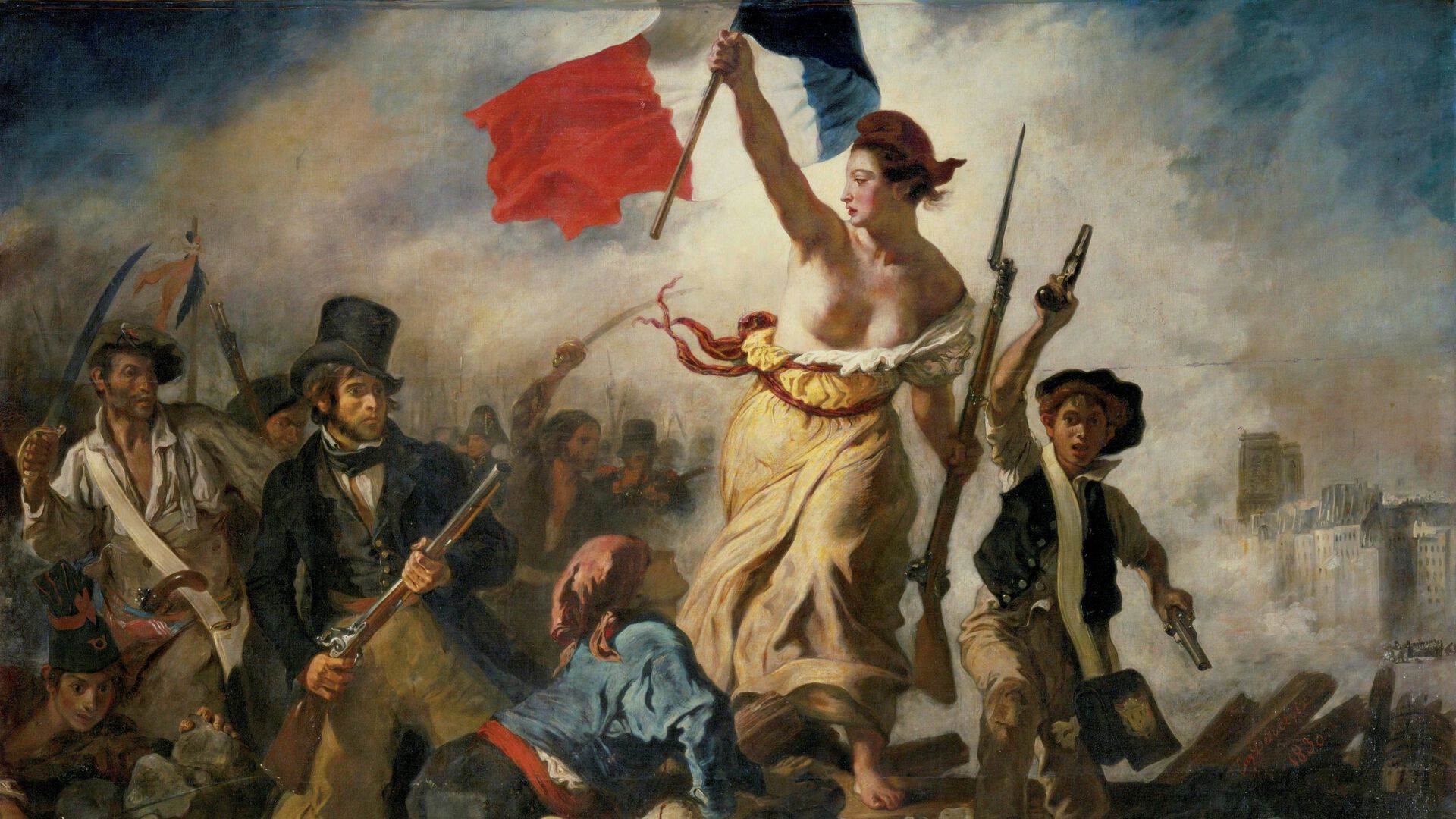
Painting: Eugène Delacroix, 1830
Source: https://commons.wikimedia.org/wiki/File:Eug%C3%A8ne_Delacroix_-_Le_28_Juillet._La_Libert%C3%A9_guidant_le_peuple.jpg
Still, there were some aspects of the Terror that didn’t contradict the enlightenment, but seemed to be the logical conclusion. One of these is the sovereignty of the will of the people. In theory, if there is a body that represents this general will without failure, any opposition to this body would mean opposition to the will of the people. Enemies of the national assembly could be marked as enemies of the people in this way, giving it a powerful tool to legitimize harsh punishments. On the other hand, if this body of representatives could fail to, spontaneous outbreaks of violence in the streets of Paris could be interpreted by some, most prominently Danton, as signs that the body deviated from the general will and that the people demanded radical measures to be taken. On 10th March 1793 he urged the national assembly to “Let us be terrible, in order to stop the people from being so.”[24] As this chapter showed, the relationship between the enlightenment and terror could take many forms. Next, I will shed a bit of light on lesser-known aspects of the Reign of Terror. [25]
In theory, if there is a body that represents this general will without failure, any opposition to this body would mean opposition to the will of the people.
Operating the Terror
On 10th October 1793 the convention suspended the republican constitution via decree and endowed the Committee of Public Safety with considerable powers, although at this point formally still only as a temporary measure. [26] This represents a further step away from the ideals of the enlightened state, disposing the division of powers in favour of the executive. The Paris Revolutionary Tribunal, probably one of the most infamous institutions of the Reign of Terror, was designed as a tool for political exploits. The judges, the prosecutor and the jury all were appointed by the Convention, which also decided on the cases which would be brought before the Tribunal. From its creation on the 10th of March 1793 through its dissolution on 31st May 1795 some 3966 cases were brought before it. Nevertheless, in contrast to popular imagination, the tribunal was not just a ruthless killing machine. In its early days, only about 25 % of the accused were handed out a death sentence, a figure that would rise to 45% by the end of the year.[27] Despite the apparent political exploitation of the Tribunal, for example in the trials against the Dantonists, its overall record and legacy for peace and justice in France is multifaceted, as it established new procedures for criminal law.[28]
While the popular image of the Tribunal may overemphasize (it’s of course still considerable deadliness) in Paris, one aspect is rarely given attention: That of the Terror´s ramifications in the provinces. Outside of the capital most may only have the massacres in the Vendée on mind, but the Tribunal served as an integral part of the wider system of Revolutionary Justice and Politics for the whole of France. Fairfax-Cholmeley uses the image of the tribunal as the heart of a body of judicial and administrative organs, which were crucial for the implementation of the Terror in the provinces.[29] Sometimes even historians overlooked this fact. Donald Greer for example, who set a benchmark with his statistical approach to the Terror, only considered where individuals were executed, omitting other aspects.[30] Considering this historiographic “blind spot” we may have to modify our perception of the “everyday” Terror in the provinces. The long arms of the Tribunal reached even there, albeit through the cooperation of other national or regional institutions.[31]
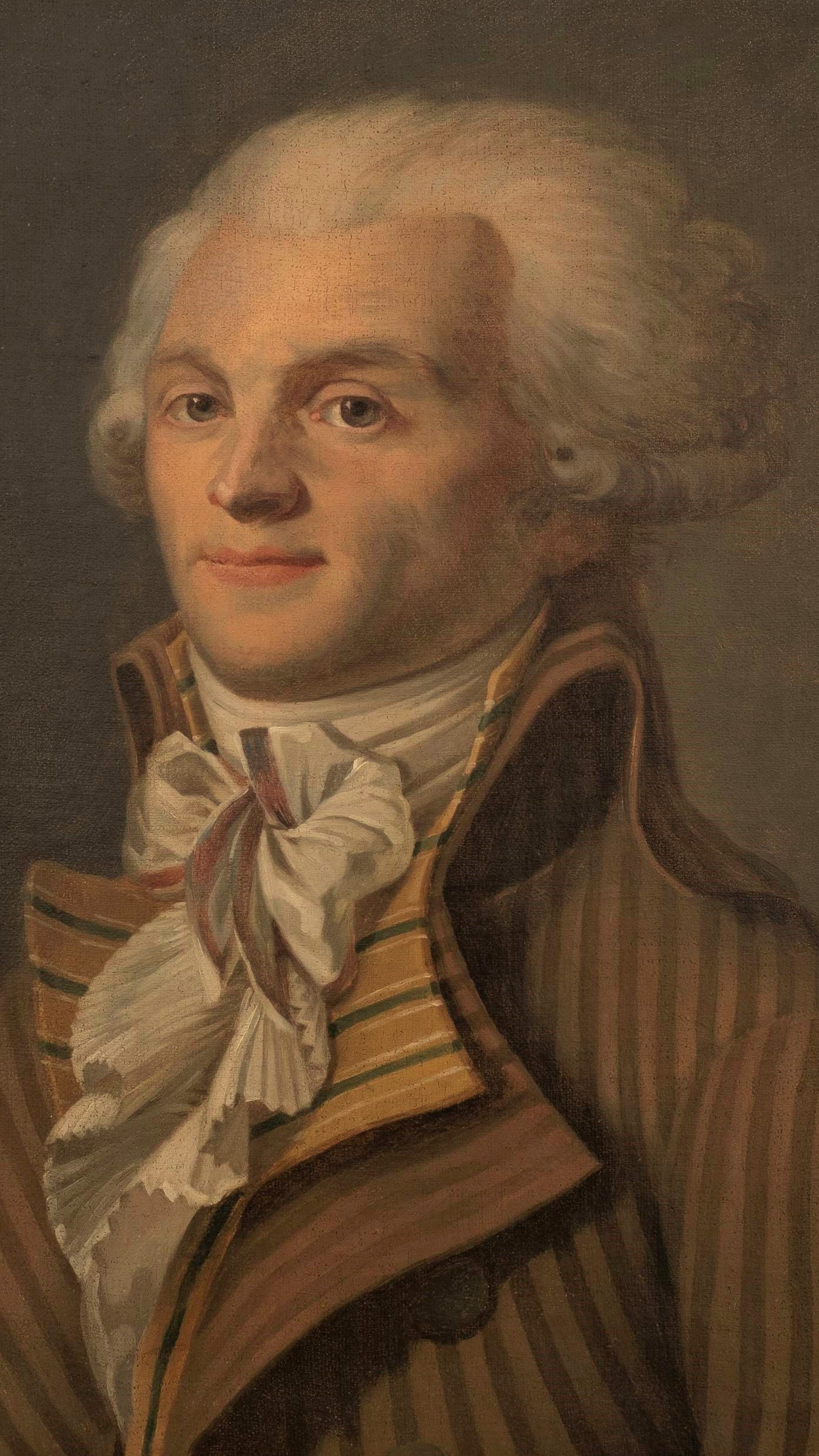
Source: https://commons.wikimedia.org/wiki/File:Robespierre.jpg
Conclusion
The Reign of Terror is one of the most famous parts of the history of the French Revolution, yet it is probably also one of the most misunderstood. In this essay, I have given a new perspective on the different aspects of this episode and what it meant for the people that experienced it. I did this both by presenting more recent findings of historians about the meaning of the Terror and by relating it to the ideals of the enlightenment.
Of course, there is no way to know for certain what the motivation and thoughts of people in the past might have been. We can only speculate from our own point of view more than two hundred years away. It is clear, however, that the ideas of the enlightenment were present on the minds of revolutionary politicians. Even if there was a diversion, it was still only a justification to lay a solid foundation for an enlightened republic. It would be overly cynical to assume that men, who mostly followed enlightened ideals way before this became an obvious path for social advancement, only took advantage of this movement in a kind of Machiavellian power grab. It seems that more often than not, honest attempts at improvement failed at unreasonably high expectations for themselves and others. If this is an excuse for violent and authoritarian leadership is, of course, a different question.
Far from reaching the magnitudes of Stalinist purges or fascist totalitarianism though, the Reign of Terror was terrible mostly for those who reigned
It would be too easy to lump the Terror together with other violent historic escapades, but as the rather limited number of cases the Revolutionary Tribunal, compared to the overall population of France, dealt with illustrates its scope should not be overestimated. Combined with new findings about the geographical extent presented in the last chapter, the Terror may be less intense, but more general than the common image suggests. Far from reaching the magnitudes of Stalinist purges or fascist totalitarianism though, the Reign of Terror was terrible mostly for those who reigned. This may put Büchner´s quote from the beginning in a different context, as those who were devoured by the Revolution were often those who found themselves on the wrong side of the National Convention when the revolutionary wheel kept on turning.
Bibliography:
Andress, David. „Politics and Insurrection: The Sans-culottes, The “Popular Movement”, and the People of Paris“, in The Oxford Handbook of the French Revolution, ed. David Andress. 401-413. Oxford: Oxford University Press, 2014.
Andress, David. „The Course of the Terror, 1793-94”, in A Companion to the French Revolution, ed. Peter McPhee. 293-309. Chichester: Blackwell Publishing Limited. 2012.
Andress, David. The Terror: The Merciless War for Freedom in Revolutionary France. New York: Farrar, Straus and Giroux, 2005.
Baczko, Bronislaw. “Enlightenment”, in A critical Dictionary of the French Revolution, ed. Furet/Ozouf. 659-667. Cambridge: Harvard University Press, 1989.
Ballard, Richard. “Terror as Government Policy”, in A new Dictionary of the French Revolution. 352-353. London: I.B. Tauris & Co Ltd., 2012.
Bates, David. Enlightenment Aberrations. Ithaca/London: Cornell University Press, 2002.
Beccaria/Parzen/Thomas. On Crimes and Punishments and Other Writings. Toronto: Toronto University Press, 2009.
Bluche, Frédéric. Danton. Stuttgart: Klett-Cotta, 1988.
Dupuy, Pascal. „The Revolution in History, Commemoration, and Memory”, in A Companion to the French Revolution, ed. Peter McPhee. 486-501. Chichester: Blackwell Publishing Limited. 2012.
Edelstein, Dan. „What was the Terror?“, in The Oxford Handbook of the French Revolution, ed. David Andress. 453-466. Oxford: Oxford University Press. 2014.
Fairfax-Cholmeley, Alex. "Creating and Resisting the Terror: The Paris Revolutionary Tribunal, March-June 1793". French History 32/2 (2018): 203-225.
Fairfax-Cholmeley, Alex. “Mapping the Terror: The Paris Revolutionary Tribunal and the Development of a National System of “Revolutionary Justice” in France, 1793-1794”. European History Quarterly 44/1 (2014): 5-32.
Furet, François. “Revolutionary Government”, in A critical Dictionary of the French Revolution, ed. Furet/Ozouf. 548-559. Cambridge: Harvard University Press, 1989.
Furet, François. “Terror”, in A critical Dictionary of the French Revolution, ed. Furet/Ozouf. 137-150. Cambridge: Harvard University Press, 1989.
Gauchet, Marcel. “Rights of Man”, in A critical Dictionary of the French Revolution, ed. Furet/Ozouf. 818-828. Cambridge: Harvard University Press, 1989.
Gauchet, Marcel. Robespierre: The Man Who Divides Us the Most. Princeton: Princeton University Press, 2022.
Hesse, Carla. „The Law of the Terror”. MLN 114/4 (1999): 702-718.
Jones, Peter. „Choosing Revolution and Counter-Revolution”, in A Companion to the French Revolution, ed. Peter McPhee. 278-292. Chichester: Blackwell Publishing Ltd. 2012.
Linton, Marisa. Choosing Terror: Virtue, Friendship, and Authenticity in the French Revolution. Oxford: Oxford University Press, 2015.
Linton, Marisa. „Friends, Enemies, and the Role of the Individual”, in A Companion to the French Revolution, ed. Peter McPhee. 263-277. Chichester: Blackwell Publishing Ltd., 2012.
Linton, Marisa. „Terror and Politics“, in The Oxford Handbook of the French Revolution, ed. David Andress. 471-482. Oxford: Oxford University Press, 2014.
Lucas, Colin. „The Theory and Practice of Denunciation in the French Revolution”. The Journal of modern History, 68/4 (1996): 768-785.
Ozouf, Mona. “Revolution”, in A critical Dictionary of the French Revolution, ed. Furet/Ozouf. 806-817. Cambridge: Harvard University Press. 1989.
Sutherland, Donald. „Urban Crowds, Riot, Utopia, and Massacres, 1789-92”, in A Companion to the French Revolution, ed. Peter McPhee. 231-245. Chichester: Blackwell Publishing Limited. 2012.
Thamer, Hans-Ulrich. Die Französische Revolution. Munich: C.H. Beck, 2019.
von Güttner, Darius. French Revolution: The Basics. London: Routledge, 2021.
Walton, Charles. „Clubs, Parties, Factions“, in The Oxford Handbook of the French Revolution, ed. David Andress. 363-379. Oxford: Oxford University Press, 2014.
Woloch, Isser. „A Revolution in Political Culture”, in A Companion to the French Revolution, ed. Peter McPhee. 436-453. Chichester: Blackwell Publishing Ltd., 2012.
Žižek, Slavoj, ed. Robespierre: Virtue and Terror. London: Verso, 2007.
[1] And allegedly even going back to the Girondist Pierre Vergniaud, whose last words before being executed by the Guillotine may have inspired this quote.
[2] Hans-Ulrich Thamer, Die Französische Revolution (München: C.H. Beck, 2019), 53.
[3] See for example: Pascal Dupuy, „The Revolution in History, Commemoration, and Memory”, in A Companion to the French Revolution, ed. Peter McPhee (Chichester: Blackwell Publishing Ltd., 2012), 486-501.
[4] Andress, „The Course of the Terror”, 294.
[5] Darius von Güttner, French Revolution: The Basics (London: Routledge, 2021), 166.
[6] Dan Edelstein, „What was the Terror?“, in The Oxford Handbook of the French Revolution, ed. David Andress (Oxford: Oxford University Press, 2014), 454.
[7] François Furet. “Terror”, in A critical Dictionary of the French Revolution, ed. Furet/Ozouf (Cambridge: Harvard University Press, 1989), 137-139.
[8] Furet. “Terror”, 145-150; Edelstein, „What was the Terror?“, 453-456; Richard Ballard. “Terror as Government Policy”, in A new Dictionary of the French Revolution, (London: I.B. Tauris & Co Ltd., 2012), 352-353.
[9] See for example: Edelstein, „What was the Terror?“, 459-464.
[10] David Andress, The Terror: The Merciless War for Freedom in Revolutionary France (New York: Farrar, Straus and Giroux, 2005), 149-178.
[11] Donald Sutherland, „Urban Crowds, Riot, Utopia, and Massacres, 1789-92”, in A Companion to the French Revolution, ed. Peter McPhee (Chichester: Blackwell Publishing Ltd., 2012), 231-245.
[12] David Andress, „Politics and Insurrection: The Sans-culottes, The “Popular Movement”, and the People of Paris“, in The Oxford Handbook of the French Revolution, ed. David Andress (Oxford: Oxford University Press, 2014), 401-413; Isser Woloch, „A Revolution in Political Culture”, in A Companion to the French Revolution, ed. Peter McPhee (Chichester: Blackwell Publishing Ltd., 2012), 445-447.
[13] Furet, “Terror”, 143-144.
[14] Charles Walton, „Clubs, Parties, Factions“, in The Oxford Handbook of the French Revolution, ed. David Andress (Oxford: Oxford University Press, 2014), 363-379.
[15] Marisa Linton, „Friends, Enemies, and the Role of the Individual”, in A Companion to the French Revolution, ed. Peter McPhee (Chichester: Blackwell Publishing Ltd., 2012), 263-277; Frédéric Bluche, „Danton“ (Stuttgart: Klett-Cotta, 1988), 259-303.
[16] Bronislaw Baczko, “Enlightenment”, in A critical Dictionary of the French Revolution, ed. Furet/Ozouf (Cambridge: Harvard University Press, 1989), 659-667.
[17] Marisa Linton, Choosing Terror: Virtue, Friendship, and Authenticity in the French Revolution (Oxford: Oxford University Press, 2015), 90-94; Colin Lucas, „The Theory and Practice of Denunciation in the French Revolution”, The Journal of modern History, 68/4 (1996): 768-785.
[18] Marcel Gauchet, “Rights of Man”, in A critical Dictionary of the French Revolution, ed. Furet/Ozouf (Cambridge: Harvard University Press, 1989), 818.
[19] Carla Hesse, „The Law of the Terror”, in MLN 114, 4 (1999): 702-718; Edelstein, „What was the Terror?“, 465.
[20] Mona Ozouf, “Revolution”, in A critical Dictionary of the French Revolution, ed. Furet/Ozouf (Cambridge: Harvard University Press, 1989), 806-817.
[21] Beccaria/Parzen/Thomas, On Crimes and Punishments and Other Writings. (Toronto: Toronto University Press, 2009), 113-150.
[22] Marcel Gauchet, Robespierre: The Man Who Divides Us the Most. (Princeton: Princeton University Press, 2022), 28-30.
[23] Gauchet, Robespierre, 66-68.
[24] Marisa Linton, „Terror and Politics“, in The Oxford Handbook of the French Revolution, ed. David Andress (Oxford: Oxford University Press, 2014), 472.
[25] David W. Bates, Enlightenment Aberrations (Ithaca/London: Cornell University Press, 2002), 138-178.
[26] François Furet, “Revolutionary Government”, in A critical Dictionary of the French Revolution, ed. Furet/Ozouf (Cambridge: Harvard University Press, 1989), 552.
[27] von Güttner, French Revolution, 154.
[28] Alex Fairfax-Cholmeley, “Creating and Resisting the Terror: The Paris Revolutionary Tribunal, March-June 1793”, French History 32/2 (2018): 203-225.
[29] Alex Fairfax-Cholmeley, “Mapping the Terror: The Paris Revolutionary Tribunal and the Development of a National System of “Revolutionary Justice” in France, 1793-1794”, European History Quarterly 44/1 (2014): 9.
[30] Fairfax-Cholmeley, “Mapping the Terror”, 14.
[31] Fairfax-Cholmeley, “Mapping the Terror”, 5-32.